We've been eating ripe figs almost daily since late June, when we first started picking Hardy Chicago fruit in the aquaponics tunnel. There were a few Black Greek fruits before that, and some wonderful Alma fruits started a bit later, but Hardy Chicago has been the workhorse in that tunnel. Here are some pics of the fruit (dark fruit are Hardy Chicago, light fruit are Alma unless otherwise noted):
6/28/2015
7/1/2015 (bottom left is Celeste)
7/5/2015
7/8/2015
7/23/2015 (bottom two are Celeste)
7/24/2015 (back right is Celeste)
The harvest season in our adjacent semi-pit tunnel lags a bit behind that of the aquaponics tunnel, and has only just recently begun. A Celeste tree in that tunnel started trickling out ripe figs on July 1st (they're in the pics above), and the first bananas started ripening last week, but most of the plants in there are still a few weeks away from ripening their fruit.
Pioneering in aquaponics and high tunnel growing; specializing in bananas, rare figs, and pure blue tilapia.
Sunday, August 2, 2015
Monday, July 20, 2015
Our New Fish House/Banana House
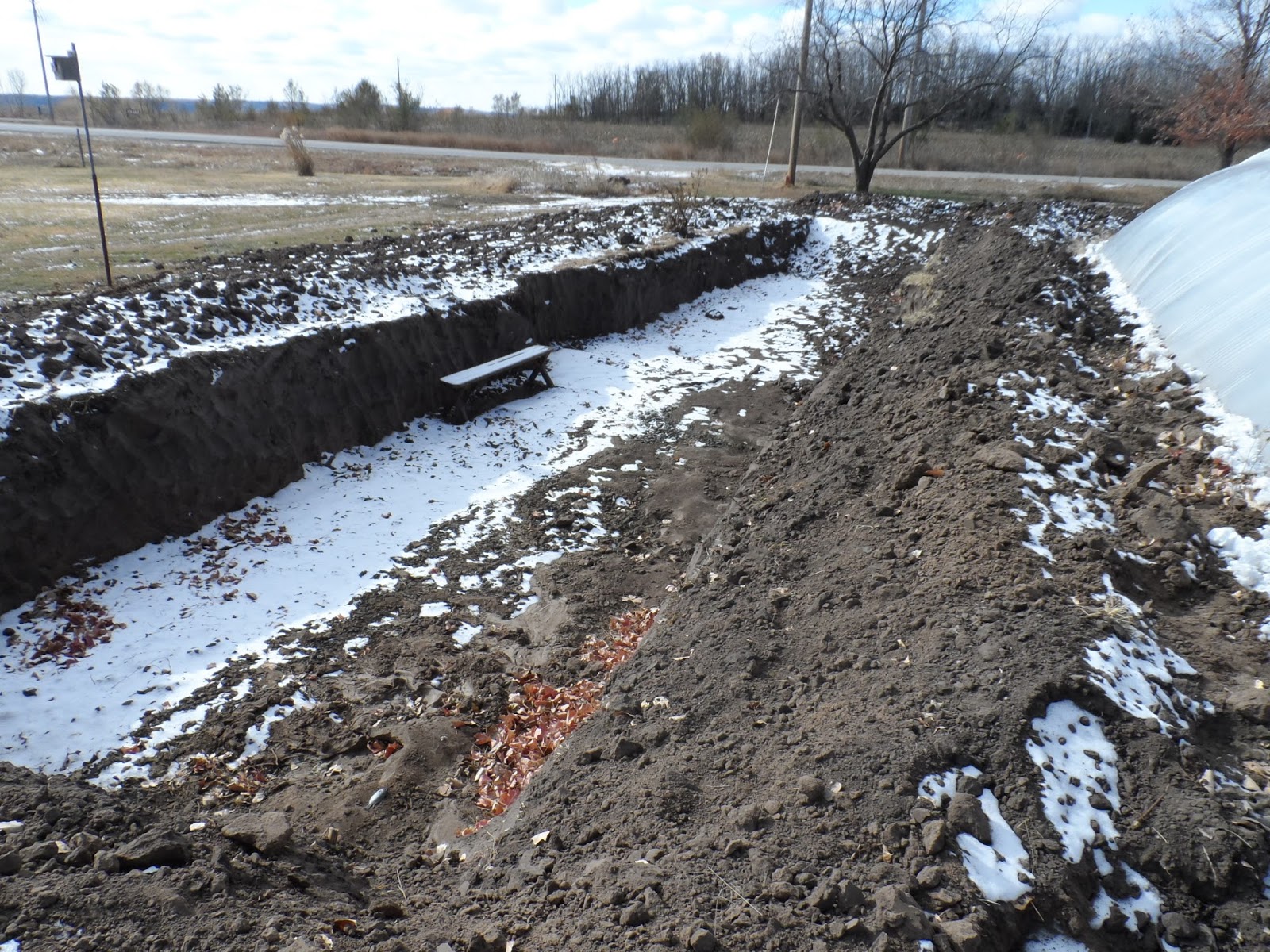
Here are some pics of our latest pit-style tunnel greenhouse, which is around 80' long x 17' wide and has a 4' deep pit. The planting areas have been dug out an additional 2', so from the perspective of the plants, they have an 11.5' ceiling.
It's still very much a work in progress, with a lot to get done before cold weather gets here. Eventually there will be 3 pools totaling around 12,000 gallons of water (I aim to finish getting them installed over the next few weeks).
Here's what the bananas looked like when I moved them in:
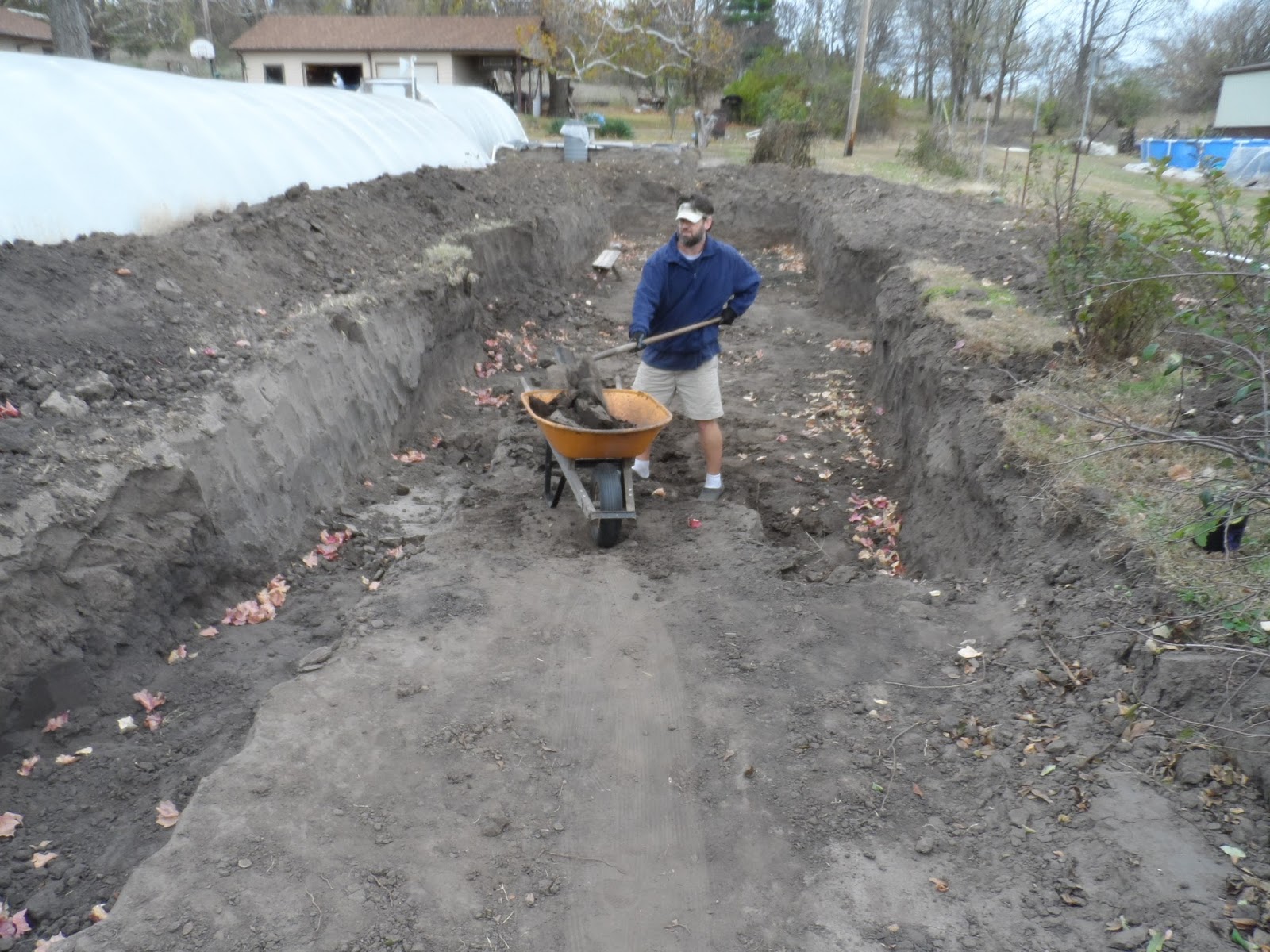
Below are a few pics from when I was building it. This time, instead of doing all of the digging by hand with a shovel and wheelbarrow as I had done with my pond and other tunnels, I rented a Bobcat. After the 1st day, I thought, "Eh, that's enough help, I'll just do the rest by hand." Which might have been an okay idea if I hadn't then decided to keep digging and make it twice as big as I had intended when I started.
Here's what the trench looked like after using the Bobcat on the first day:
Then after some hand-digging:
Then after more hand-digging...
Special thanks to my nephew and Dad :)
Semi-pit tunnel greenhouse update - lots of figs and bananas
This semi-pit tunnel greenhouse is on its way to becoming just a fig house. I've been moving all of the bananas out and into a new, larger greenhouse that I've just built. There is still a strip of Dwarf Orinoco bananas remaining, though, and they've currently got 5 bunches of fruit hanging.
Kansas Fig Orchard update
Here are some pics of the banana and fig orchard from last September 4th-14th:
To protect the figs during the winter, I bent them over and mounded topsoil over them. It didn't work very well, though: all of them died down to the ground except for the Hardy Chicago, which had about 18" of trunk survive. I left a couple of Dwarf Orinoco bananas out to see what would happen, and they died all the way down to the corm, so they didn't even send out pups in the spring.
Thankfully, all of the figs have grown back. The Hardy Chicago, Marseilles Black (MBVS), and Celeste are all carrying figlets that are on pace to start ripening in mid-September, and a couple of new additions (LSU Tiger and Vista, which is an especially vigorous strain of Violette de Bordeaux) are loaded with figs, too. Bananas are a lost cause out there, so we're growing sweet corn in that spot instead. Here's what the area looks like now, with the season's last planting of corn currently around 4" in height:
(the smaller/paler figs were just planted last week)
To protect the figs during the winter, I bent them over and mounded topsoil over them. It didn't work very well, though: all of them died down to the ground except for the Hardy Chicago, which had about 18" of trunk survive. I left a couple of Dwarf Orinoco bananas out to see what would happen, and they died all the way down to the corm, so they didn't even send out pups in the spring.
Thankfully, all of the figs have grown back. The Hardy Chicago, Marseilles Black (MBVS), and Celeste are all carrying figlets that are on pace to start ripening in mid-September, and a couple of new additions (LSU Tiger and Vista, which is an especially vigorous strain of Violette de Bordeaux) are loaded with figs, too. Bananas are a lost cause out there, so we're growing sweet corn in that spot instead. Here's what the area looks like now, with the season's last planting of corn currently around 4" in height:
(the smaller/paler figs were just planted last week)
Thursday, May 21, 2015
Black Greek - breba and main crop figs
The small Black Greek fig tree growing in the gravel growbed in our aquaponics tunnel has recently produced a couple of figs, 1 breba and 1 main crop.
The upside is that they were huge and juicy with good flavor; the downside is that they split badly and were a bit watery. The splitting is tough to judge yet, though, since these two figs were low enough that they rested on the ground, which puts a splitting stress on the sides of the figs as gravity tries to flatten them out.
Despite the splitting, there was no souring. The breba, which was still a bit underripe when I picked it, had a bit of a cavity and probably would have soured if I had let it fully ripen on the tree, but the main crop fig was solid throughout, so I think the main crop figs will do a good job of avoiding spoiling by denying entry to insects and moist air. If the figs higher up off the ground can hang in the tree long enough to lose some of their water and concentrate their flavors, this could prove to be an amazing fig variety.
Here's the little Black Greek tree:
Black Greek breba fig (109 grams):
Black Greek main crop fig, visible in the tree pic above, showing its split eye (70 grams):
The upside is that they were huge and juicy with good flavor; the downside is that they split badly and were a bit watery. The splitting is tough to judge yet, though, since these two figs were low enough that they rested on the ground, which puts a splitting stress on the sides of the figs as gravity tries to flatten them out.
Despite the splitting, there was no souring. The breba, which was still a bit underripe when I picked it, had a bit of a cavity and probably would have soured if I had let it fully ripen on the tree, but the main crop fig was solid throughout, so I think the main crop figs will do a good job of avoiding spoiling by denying entry to insects and moist air. If the figs higher up off the ground can hang in the tree long enough to lose some of their water and concentrate their flavors, this could prove to be an amazing fig variety.
Here's the little Black Greek tree:
Black Greek breba fig (109 grams):
Black Greek main crop fig, visible in the tree pic above, showing its split eye (70 grams):
Subscribe to:
Comments (Atom)