Sunday, May 15, 2011

Aquaponic Potatoes

Little spuds have started mushrooming on the surface of the gravel:


The area vacated by the squash has been filled in with some eggplants that were being smothered elsewhere. So in return for pulling a dozen squash plants, I have uncovered about 30 pepper plants and freed up room for 20 eggplants. Seems like a fair trade.


A fast-growing tomato:


The dinner plate beckons:


Overview:

Wednesday, May 11, 2011

Sans Squash

I decided to pull out the summer squash today. Their sprawling was about to wipe out all my pepper plants to one side and some lettuce to the other, so since only a few squash fruits had been setting, I made the painful decision to pull.

I can think of four major factors likely contributing to the disappointing squash yield:

1) planted too close together to get adequate light, which also caused them to divert a lot of resources away from fruit production toward capturing more light;

2) lack of proper nutrition (new aquaponics systems take 6-18 months to build up the diverse and rich supplies of nutrients that heavily fruiting vegetables require; coupling those deficiencies with excess nitrogen results in lots of vegetative growth and little fruiting);

3) pH higher than what squash plants prefer (plants have trouble absorbing nutrients if pH is too high)

4) poor pollination (bees haven't really discovered the garden yet)

I'll address these factors and hopefully have better luck with the next round of squash in the grow bed.

Now for some pics. First, from the doorway:


Their vacated section (note the whispy pepper plants on the left):


Into the recycle bin, a.k.a. the fish tank:


It's tough to see, but the junction with the dense cluster has 6 cucumbers. I thought it was amazing when the cucumbers were launching a fruit at every junction (about 3 inches apart); words fail me if they start launching 6 per junction.


This Royal Burgandy bean is about 6" long:

Monday, May 9, 2011

Can you tell it hailed?

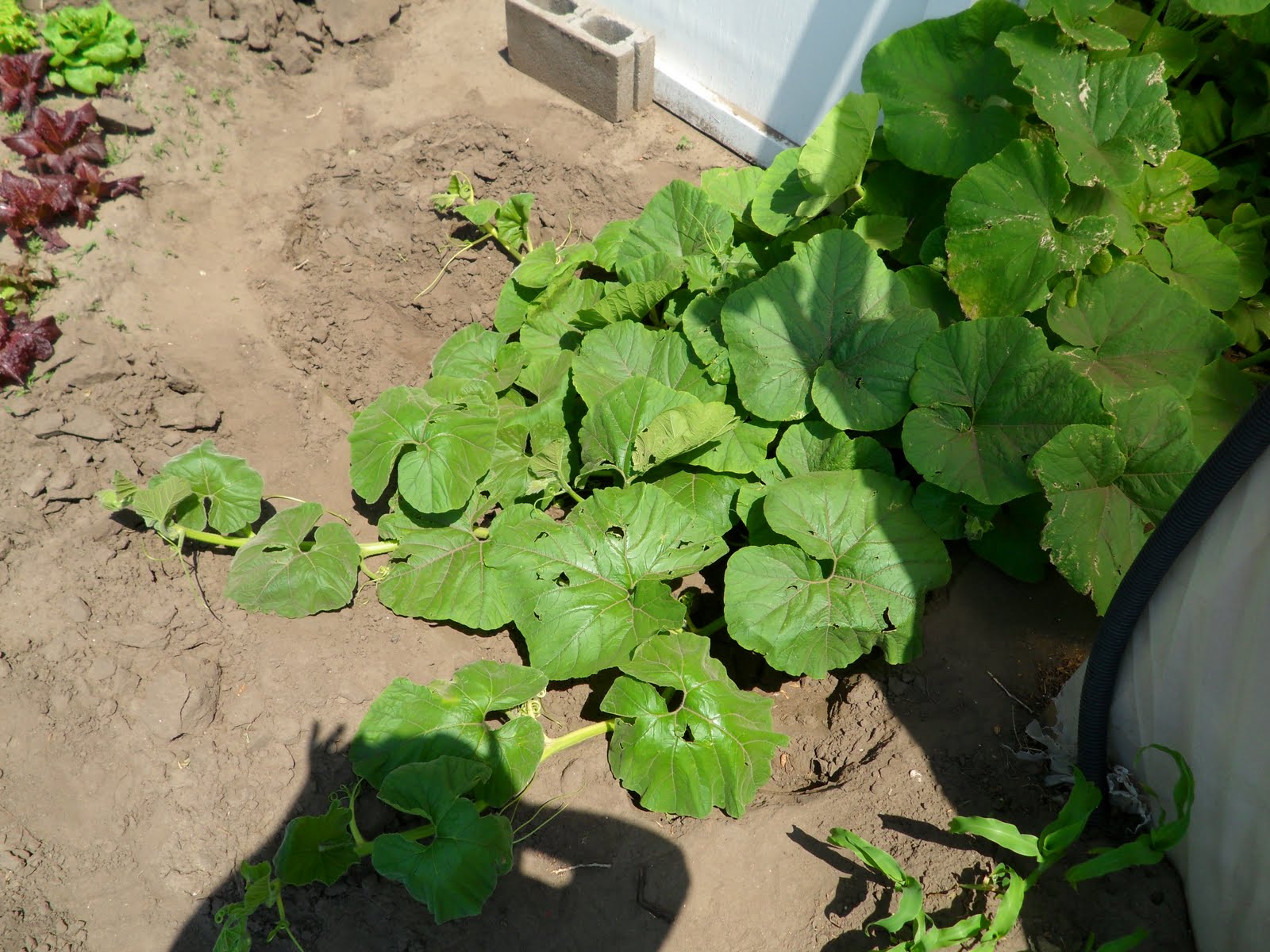
The pumpkins paid the price for their wandering:


Luckily, this was the only damage. The high tunnel plastic held up fine :)

How fast does lettuce grow in a high tunnel aquaponics system?

Last week I transplanted some lettuce seedlings from planter cells into the gravel grow bed. I didn't use all of the seedlings, so I kept the leftovers in their trays. As you look at the following picture, keep in mind that all of these plants were the same size less than a week ago. The ones in the trays have grown a bit since then, but nothing like the lucky ones in the gravel.


Here's a pic of the same section taken 4 days ago:


So how fast? Really fast.

Thursday, May 5, 2011

Greener and greener

**********

Note for C2C visitors -- clicking on the "GreenFin Gardens" title above will allow you to scroll through all of the aquaponics garden posts.

Here's a link back to the featured page on the C2C website: http://www.coasttocoastam.com/photo/view/aquaponic_garden/51718

**********

Overview from the front:


From the back:


The plan with the pumpkins is to let them run out the door via a pit. Eventually, when the vines have run far enough, I'll fill the pit back in, burying a 3' section of the vines and allowing the door to close again.


Small tomatoes like this one have started popping up throughout the jungle.


The corn plants are becoming good listeners:


This fresh planting of buttercrunch should grow incredibly fast.


Potato flowers. My plan is to put a tomato cage around the plant, then fill it up with leaves and straw in order to grow the spuds above ground.


Royal Burgandy beans:

Sunday, May 1, 2011

Beans, peas, and requisite z's

The Royal Burgandy garden beans have begun their journey to our bellies:


As have the snow peas:


Watching the veggies grow is hard work; just ask my helpers:

Thursday, April 28, 2011

Injury in the garden

There was a bit of a sad moment in the garden today when I saw that the monstrous 3' tall summer squash vines had toppled over, causing some severe splitting at their bases. The splits go anywhere from 1/3 to 2/3 of the way through the vines and will be easy points of entry for any interested bugs. The plants are still alive and seemingly doing well, but in the future I think I'll put tomato cages around the seedlings when growing in this sort of environment. (I'll probably end up with summer squash plants that look like Christmas trees.)


Mammoth Rock cabbages, with my conveniently sized foot-long foot to provide scale:


The first of the Early Sunglow is beginning to send up tassles:


It's interesting how the beets are growing their bulbs above ground, kohlrabi-like, as an adaptation to growing in rocks:


A young tomato fruit growing as fast as my belly during the holidays:


The pumpkins have decided to go exploring:


Overview: